Laser Cutting Meets Board Games: A Designer's Review
As a brand designer who spends most of my week refining brand identity systems for local artisans and boutique owners, I am constantly on the lookout for unique graphic design assets that can elevate a product from "homemade" to "heirloom." Recently, I had the opportunity to evaluate the Dice Tray Laser Cut Board Game Tray not just as a gaming accessory, but as a potential cornerstone for a broader small business branding project. While its primary function sits squarely within the world of Board Games, the intricate details of this piece offer a fascinating case study for anyone involved in packaging design, product label creation, or custom merchandise development.
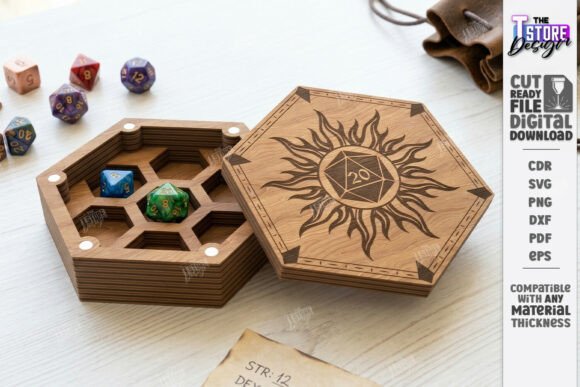
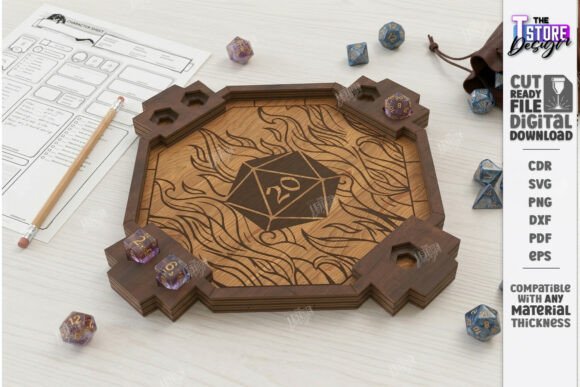
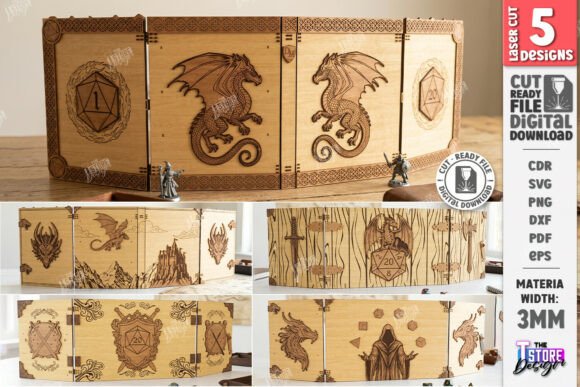
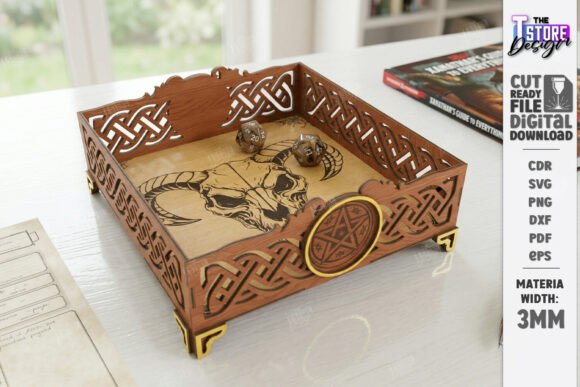
My first impression of the Dice Tray Laser Cut Board Game Tray was one of rugged elegance. The interplay between the engraved dragon, the wolf motif, and the Viking compass creates a mood that is undeniably mystical yet grounded. It feels premium, handmade, and deeply rooted in folklore. For a local business owner—perhaps someone running a specialty coffee roastery with a Nordic theme, a craft brewery focusing on mythological ales, or even a high-end candle brand selling "forest floor" scents—this aesthetic is gold. It suggests a brand personality that is bold, adventurous, and attentive to detail. It is not playful in a childish sense; rather, it is decorative in a way that commands respect and curiosity.
Transforming Gaming Gear into Brand Storytelling
The true value of a versatile asset like the Dice Tray Laser Cut Board Game Tray lies in its adaptability beyond the tabletop. In a real-world scenario, imagine a handmade business selling artisanal soaps. The vector files used to create this laser-cut tray could be repurposed (assuming the appropriate commercial license is secured) to create stunning embossing patterns on packaging boxes or intricate cut-outs for hang tags. The visual language of the dragon and wolf speaks to protection, strength, and nature—themes that resonate powerfully in the current market for organic and ethically sourced goods.
For product sellers and marketers, this type of design asset supports business presentation in several critical ways. Firstly, it creates a stronger first impression. When a customer unboxes a product featuring such detailed engraving or print work, the perceived value skyrockets. Secondly, it aids in better product recognition. A consistent use of the Viking compass or mystic symbols across social media, website banners, and physical labels builds a cohesive visual narrative. This leads to improved customer trust; the attention to detail implies that the business owner cares equally about the product inside and the experience of receiving it.
Strategic Applications for Local Brands
Where does an asset inspired by the Dice Tray Laser Cut Dungeons and Dragons Tabletop Gaming Gear fit best in a commercial design portfolio? Here are the high-impact areas where this style shines:
- Packaging Accents: Using the laser-cut patterns as windows on rigid boxes or as foil-stamped details on luxury sleeves.
- Hero Graphics: Featuring the dragon and wolf motifs prominently on website headers or main promotional posters to set the tone immediately.
- Social Media Graphics: Creating textured backgrounds for Instagram stories or Facebook ads that reinforce the brand's mythical or rustic vibe.
- Seasonal Packaging: Adapting the mystic symbols for limited-edition holiday runs, perhaps for a winter solstice campaign.
- Thank-You Cards: Incorporating the subtle compass design into the background of insert cards to guide the customer's journey.
However, a professional designer knows that not every asset works everywhere. There are situations where the Dice Tray Laser Cut Board Game Tray aesthetic should be used with caution. For instance, in formal corporate branding for a law firm or a medical startup, the fantasy elements might feel out of place and undermine professionalism. Similarly, on very small labels where space is at a premium, the intricate lines of a laser-cut design can become muddy if not scaled correctly. It is also crucial to avoid using such heavy decoration in ingredient-heavy layouts or near legal information areas, as it can distract from mandatory text and violate readability standards. If you are aiming for a luxury minimalist look, this level of ornamentation might compete too aggressively with the whitespace that defines that style.
Practical Notes for the Modern Designer
Before integrating this style into a client's brand identity, there are several practical steps I recommend taking. First, test it on real packaging mockups. What looks sharp on a screen might lose definition when printed on kraft paper or textured cardstock. Always check the design in black and white to ensure the visual hierarchy holds up without color reliance. Since the original item is a result of Laser Cutting, the lines are likely precise, but when converting this to a PNG design or SVG design for print, you must inspect the vector editability. Can you simplify the nodes? Is the stroke weight consistent?
Typography pairing is another critical consideration. This asset pairs beautifully with strong serif fonts that evoke history and tradition, or rugged display fonts that match the fantasy theme. However, be careful when placing it beside delicate script fonts or overly modern sans serif fonts; the contrast can sometimes feel disjointed unless intentionally styled for an eclectic look. Furthermore, always compare it with competitor packaging. If every local bakery is using similar rustic icons, you need to find a way to make your application of the dragon or wolf motif unique to avoid blending in.
Finally, and perhaps most importantly, confirm the commercial license. Whether you are buying the physical tray for photography purposes in a product mockup or licensing the digital files for reproduction, understanding the rights is non-negotiable for professional branding. You cannot use a design found on a creative marketplace for mass production without verifying the terms. Once cleared, however, the Dice Tray Laser Cut Board Game Tray offers a rich vein of inspiration. It proves that even niche items from the world of RPGs can provide the structural and aesthetic foundation for a compelling local business story, turning a simple dice rolling surface into a symbol of brand quality and imaginative depth.
In conclusion, while the Dice Tray Laser Cut Board Game Tray is designed for the dungeon master, its visual DNA is perfectly suited for the modern entrepreneur looking to add depth, texture, and storytelling to their marketing visuals. By treating it as a flexible design asset rather than just a gaming tool, creative professionals can unlock new possibilities for editorial design, web design, and tangible product experiences that resonate deeply with customers.